
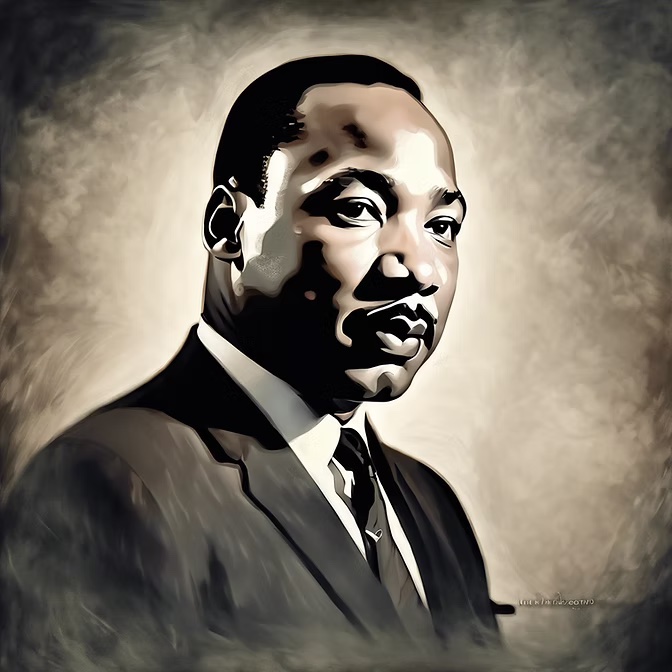
As we honor the life and legacy of Dr. Martin Luther King Jr., we are reminded that his vision of justice and equality transcended religious boundaries. Dr. King’s work not only shaped the civil rights movement but also inspired faith communities of all traditions to stand united against injustice and to uphold the dignity of every human being. From his roots in Christian theology to his embrace of universal principles of love and justice, Dr. King’s message continues to resonate across spiritual and secular divides.
The Faith That Fueled the Dream
At the heart of Dr. King’s activism was his profound Christian faith. As a Baptist minister, he drew upon biblical teachings to articulate a vision of justice rooted in love. His belief in the inherent worth of all people, as children of God, drove his unwavering commitment to nonviolence and equality. He frequently invoked the prophetic call to “let justice roll down like waters and righteousness like a mighty stream” (Amos 5:24), a vision that galvanized the hearts of many.
Yet, Dr. King’s faith was not confined to the church walls or limited to Christian doctrine. He embraced the wisdom and moral imperatives of other traditions. He was deeply influenced by Mahatma Gandhi’s application of nonviolence, which stemmed from Hindu principles of ahimsa (non-harming). Dr. King’s ability to draw from diverse traditions reflected his belief in the interconnectedness of humanity and the shared moral responsibilities that bind us.
A Beacon for Interfaith Solidarity
Dr. King’s work inspired faith communities to come together in unprecedented ways. During the civil rights movement, leaders from Jewish, Muslim, Hindu, and other traditions marched alongside Christians, united by a shared commitment to justice and equality. Rabbi Abraham Joshua Heschel, who famously marched with Dr. King in Selma, described their efforts as “praying with our feet,” a sentiment that captures the spiritual depth of their activism.
The interfaith dimension of Dr. King’s work remains a powerful example of what can be achieved when communities transcend their differences to pursue a common good. He called on people of all faiths to see beyond the barriers of creed and to recognize the universal values of love, justice, and compassion. This message remains as vital today as it was during his time.
Dr. King’s Legacy in Today’s Interfaith Context
In our modern world, where divisions based on religion, race, and ideology often dominate headlines, Dr. King’s vision of a “beloved community” offers a roadmap for healing and unity. His emphasis on dialogue, mutual respect, and the pursuit of shared goals resonates deeply with the principles of interfaith engagement.
Faith-based organizations across the globe continue to honor Dr. King’s legacy by working together to address pressing social issues such as poverty, climate change, and systemic injustice. Interfaith coalitions, inspired by his example, strive to embody the values he championed by advocating for policies that promote equity and human dignity.
A Call to Action
As we celebrate Martin Luther King Jr. Day, let us not only reflect on his remarkable achievements but also recommit ourselves to the ideals he lived and died for. Regardless of our faith traditions, we are called to be co-creators of a world where justice and love prevail.
Dr. King reminded us that “the arc of the moral universe is long, but it bends toward justice.” However, it is up to us, as people of faith and conscience, to actively bend that arc through our actions, our prayers, and our solidarity. By working together across lines of faith and culture, we can honor his legacy and bring his dream closer to reality.
By: Michele Norris